Key Takeaways
- Shadow AI is often a signal that approved tools are not meeting employees' needs.
- Governance should be proportional to risk rather than applied equally to every AI experiment.
- Approval processes should move quickly, with a target of roughly two weeks for new AI tools and use cases.
Why Shadow AI appears
Shadow AI creates a difficult tension. Employees want to experiment, while security and IT teams need visibility and control.
The instinctive response is often to restrict access. But excessive control can have the opposite effect: people continue experimenting, except the experimentation becomes invisible.
Look at the signal, not just the symptom
A more useful question is: why are employees going outside the approved AI environment in the first place?
There may be several practical reasons:
- They need a different model.
- An approved tool lacks the functionality they need.
- Getting a new tool or use case approved takes too long.
Those signals are valuable because they show where the approved environment may not be meeting real user needs.
Create safe paths for experimentation
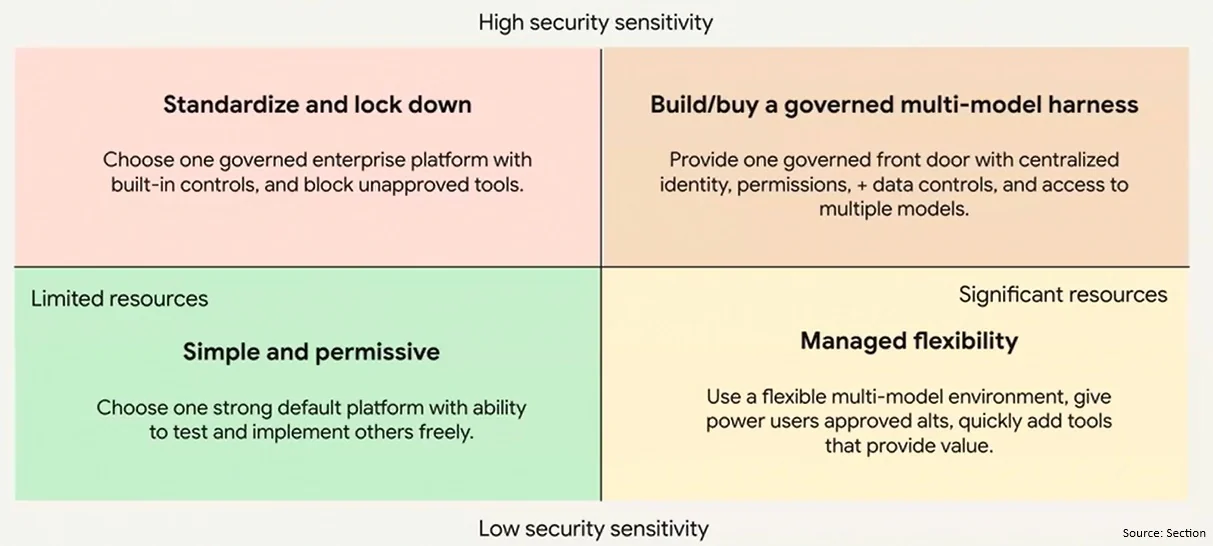
A practical enterprise model is to provide strong approved AI tools, create controlled sandboxes for experimentation, and establish a clear exception process when alternatives are genuinely required.
Approval processes also need to move quickly, with a target of roughly two weeks for new AI tools and use cases.
Apply governance in proportion to risk
Testing a low-risk productivity use case should not face the same process as deploying an AI system that accesses sensitive data or takes autonomous actions.
The goal should not be maximum control. It should be maximum visibility with responsible freedom to experiment.
How is your organization balancing AI experimentation with governance?