Key Takeaways
- Multi-agent workflows are rising fast, with Databricks reporting 327% growth in just four months.
- AI agents are fundamentally changing IT infrastructure: 80% of databases and 97% of database branches are now created by AI agents, fueled in part by the surge in vibe coding.
- The companies getting AI into production are not winging it. Firms using evaluation tools get nearly 6x more AI projects live, while those using AI governance put over 12x more into production.
One thing stood out in Databricks’ State of AI Agents 2026: the most successful teams are being surprisingly pragmatic in their approach instead of chasing the latest shiny new AI tools.
The top use cases are still rooted in routine business work: market intelligence and strategic analytics, business operations and automation, and risk, compliance and transaction processing. And 40% of top AI use cases are tied to customer experience and engagement.
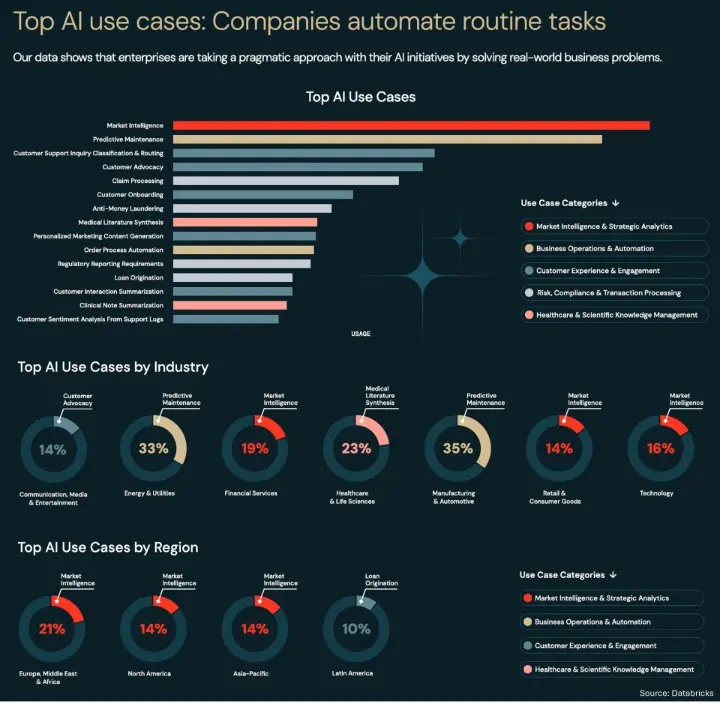
That tells us something important.
AI agents are not winning because they sound futuristic. They are winning when they reduce friction in high-volume workflows, use enterprise context, and operate inside clear guardrails.
Also worth noting: 78% of companies are already using two or more LLM model families. The future probably does not belong to a single model. It belongs to teams that can orchestrate the right models, tools, and data/context for the job.
Our takeaway: in 2026, the real moat is not the agent. It is the entire ecosystem around the agent. What do you think will matter more over the next 12 months: better agents, or better governance and evaluation?
#AIAgents #AgenticAI #EnterpriseAI #AIGovernance #Automation #GenAI