
Key Takeaways
- Reporting pressure is rising: 88% of leaders cite month-end closing as a major bottleneck, showing that finance teams are still under intense pressure to close faster and report with confidence.
- Consolidation is still a huge drag: 80% of teams are losing time to manual data extraction and consolidation across fragmented file formats.
- The real gap is execution: Many firms know where the problems are, but progress stalls when automation stays in planning mode instead of moving into implementation.
Everyone talks about AI as the future of work.
But many finance teams are still buried in the same manual work they have been dealing with for years.
Supplier invoice processing is one example. 85% of finance operations leaders say it remains a major pain point. But the biggest issue in the data is month-end closing at 88%.
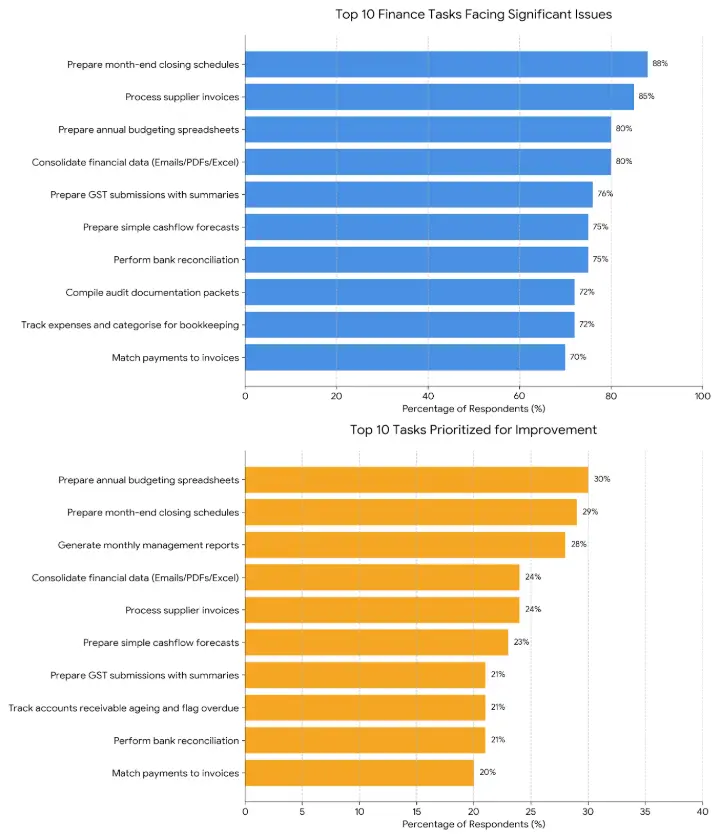
That says a lot.
The real opportunity is not just speeding up transactions. It is helping finance teams close faster, consolidate data more reliably, and spend less time chasing information across emails, PDFs, and spreadsheets.
What also stood out is the execution gap.
In many organizations, the challenge is no longer identifying automation opportunities. It is getting past the “we should do this” stage and actually putting solutions into production.
Our takeaway: the winners will not be the teams with the most ambitious automation roadmap. They will be the teams that start, simplify, and build momentum early.
Where is your biggest bottleneck today: closing, invoice processing, or data consolidation?
#FinanceAutomation #DigitalTransformation #AILeadership #FinOps #AutomationStrategy