Key Takeaways
- Only 56% of workers in Singapore say they are happy at work, yet 81% believe workplace happiness is achievable.
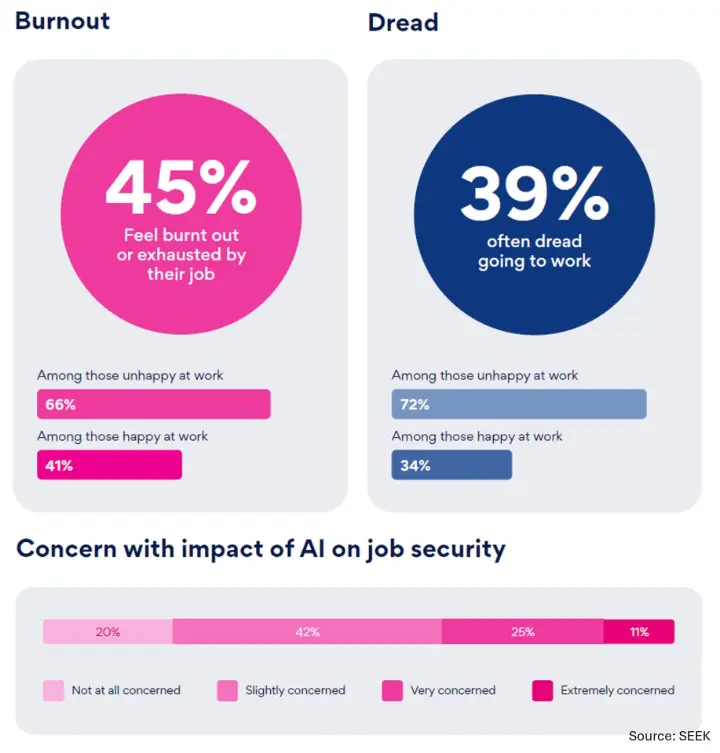
- 45% feel burnt out or exhausted, and stress remains the lowest-rated aspect of work.
- One in three workers are very or extremely concerned about AI’s impact on job security.
This is the part leaders should pay attention to.
We often assume workplace happiness is mostly about compensation. And yes, compensation matters. In the Workplace Happiness Index report by SEEK , 64% said a higher salary would make them happier. But when SEEK looked at what actually drives happiness, purpose at work came out on top.
That matters even more in an AI and automation era.
When work gets redesigned, streamlined, or partially automated, employees are not just asking, “Will I be paid fairly?” They are also asking, “Does my work still matter?” and “Can I still grow here?”
That concern shows up clearly in the data. Only 37% are happy with career progression opportunities, and one in three workers are very or extremely concerned about AI’s impact on job security.
We are also entering a phase where some employees increasingly view AI through the lens of layoffs, hype, and what many now call AI washing. Block’s recent massive 40% job cuts are a good example. The company pointed to AI-driven efficiency, while critics and former employees questioned whether AI was really the main story.
Our takeaway: the future of work is not just about deploying better AI. It is about building trust, maintaining credibility, and designing better jobs around it.
Use AI to remove drudgery, yes. But be transparent, protect trust, and help people see where they still fit.
Are leaders getting this balance right?
#FutureOfWork #EmployeeExperience #AIatWork #Automation #Leadership