Key Takeaways
- Start small, think big: AI delivered at the individual task level , for example summarizing emails or generating meeting notes, builds comfort and trust for broader use.
- Progress through risk-aware stages: From boosting individual productivity to enabling/automating specialized tasks to embedded agentic AI in business processes, organizations climb a risk slope that balances value and governance.
- Measure “small t” transformations as a system: Meaningful value emerges when these incremental efforts form a coherent capability-building journey, not isolated wins.
We’re in a critical inflection point with generative AI: the pressure to “transform fast” is real, but the gold rush mentality often outpaces strategic execution. The latest research from MIT Sloan underscores that tangible AI value doesn’t require going all in first.
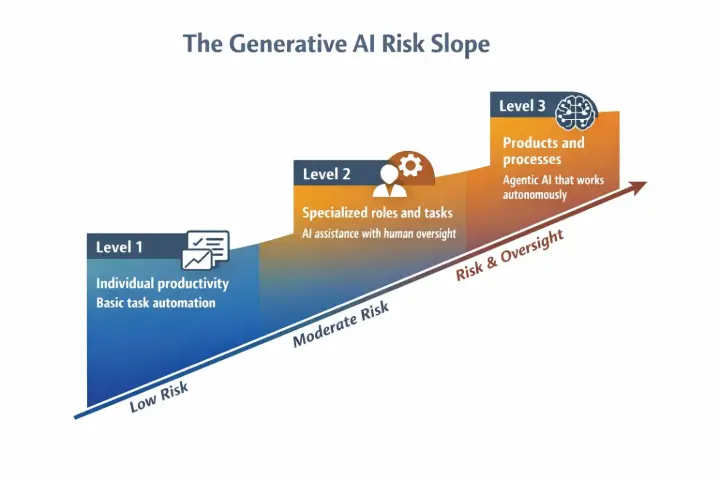
Here’s what stands out for practitioners and leaders:
👉 Incremental wins compound. Enabling AI for everyday tasks (think inbox triage, calendar smart scheduling, contextual writing assistance) builds trust, familiarity, and data literacy across the workforce.
👉 Don’t treat AI as a silver bullet. Not every business problem can and should be solved with AI. Prioritize use cases that are both technologically and commercially viable.
👉 Find your champions. Not everyone will readily embrace AI. Focus on people who are genuinely excited about the technology and leverage them as agents of change within your organization.
👉 Human-in-the-loop isn’t a compromise; it’s a strategy. At Level 2 of the AI risk maturity stack, AI supports specialized roles like customer service or coding while humans guide outcomes, a balance between risk and reward.
At its core, this research reminds us that AI strategy is organizational strategy. The ability to orchestrate small successes to create enduring business capabilities is what separates hype from long-term impact. As AI leaders, our job isn’t only to innovate; it’s to teach the organization how to evolve with AI.
Reflection: What small AI use case in your organization could be the catalyst for a much larger transformation?
#AI #AIstrategy #AIGovernance #GenerativeAI #BusinessTransformation #Automation #DigitalLeadership #EnterpriseAI #DigitalTransformation
How can organizations unlock big value from small AI efforts?