Key Takeaways
- AI adoption is broad but uneven. More than half of surveyed firms had invested in AI by 2025, rising to an expected 85.4% in 2026, with smaller firms still earlier in the adoption curve.
- The biggest near term payoff is productivity, not headcount reduction. Executives reported average AI-related labor productivity gains of 1.8% in 2025, expected to rise to 3.0% in 2026.
- Job redesign matters more than job destruction. Aggregate employment effects are small, while routine clerical work declines and demand for skilled technical roles rises.
What makes the NBER paper “Artificial Intelligence, Productivity, and the Workforce: Evidence from Corporate Executives” interesting is that it pushes past the lazy “AI replaces people” narrative.
The gains are strongest in high-skill services and finance, with smaller but still positive effects in manufacturing, construction, and lower-skill services. And importantly, the benefit is not mainly coming from capital deepening. It is coming from revenue-based total factor productivity.
In other words, AI’s benefits are not mainly because firms are simply spending more money on AI tools. The bigger effect is that firms are using AI to improve processes, speed up decisions, create better products/services, serve customers better, and generate more revenue per worker.
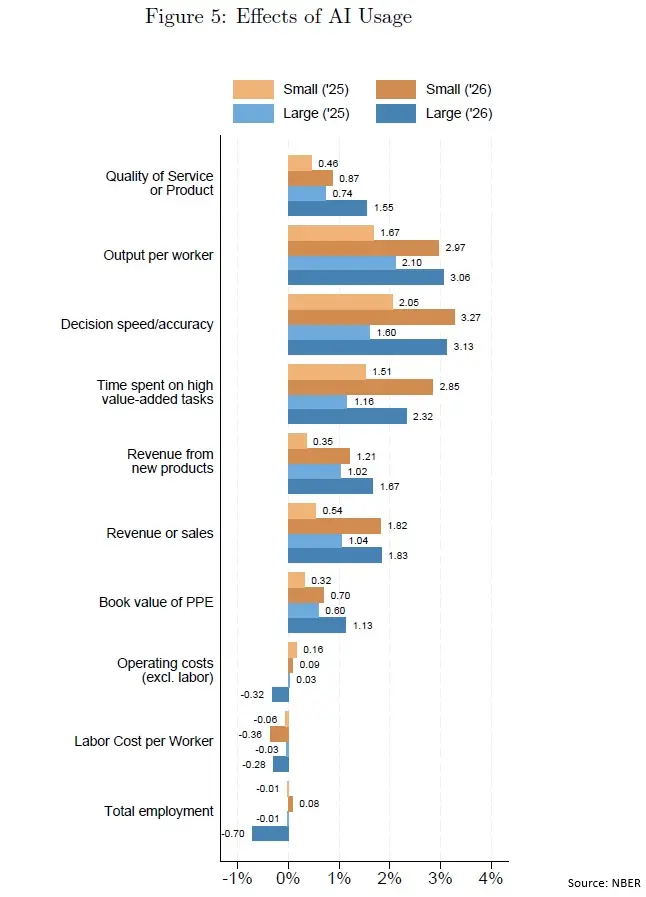
There is also a real productivity gap emerging. Executives say AI is improving workflows and output faster than those gains are showing up in revenue-based measures. That lag matters. Operational improvement often arrives before financial reporting catches up.
That is the strategic signal that companies ought to heed: AI leaders should focus less on cost cutting theatre and more on redesigning work, accelerating decisions, and building the capabilities that help gains compound over time.
Are you seeing AI mainly improve speed and quality, or is it already showing up clearly in revenue and margin?
#AI #Automation #Productivity #FutureOfWork #EnterpriseAI #DigitalTransformation
How is AI actually affecting productivity and jobs inside real companies right now?