Key Takeaways
- 84% of companies have not redesigned jobs to fit AI, even as automation expectations keep rising.
- By 2028, at least 15% of daily work decisions may be made by digital colleagues.
- The real challenge is not adding agents. It is redesigning decision rights, workflows, oversight, and human roles.
This is the part of the AI conversation more leaders need to sit with.
We keep talking about deploying agents as if the hard part is the tech. It is not. The harder question is: what happens to the operating model when non-human actors can decide and act?
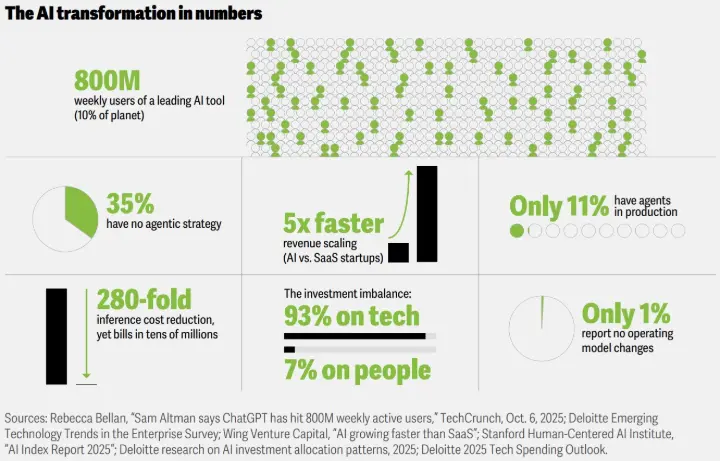
That changes everything.
If agents are treated like software, but behave like workers, ownership gets blurry fast. Who approves? Who intervenes? Who is accountable when an agent makes the wrong call at scale?
And if you drop agents into broken processes, you do not get transformation. You get faster chaos.
Our takeaway: the winners in the next phase of AI will not be the companies with the most agents. They will be the ones that redesign work with clear guardrails, strong exception handling, auditable decision logic, and human roles built around judgment, oversight, and trust.
This window matters. It is still early enough to design this well.
Are you seeing organizations rethink the work itself, or just bolt agents onto old processes?
#AgenticAI #AIAgents #FutureOfWork #Automation #DigitalTransformation #AIGovernance #JobRedesign #ProcessRedesign
How should companies redesign work for AI agents, not just blindly automate tasks?